Short answer: JKM415M-54HL4-V is the 415 W Tiger Pro for a home roof, JKM440M-6TL4 is the 440 W 60TR, and JKM550M-72HL4-V is the 550 W 72HC. All three are p-type mono PERC modules from the series Jinko launched on May 15, 2020.
Updated: November 2026
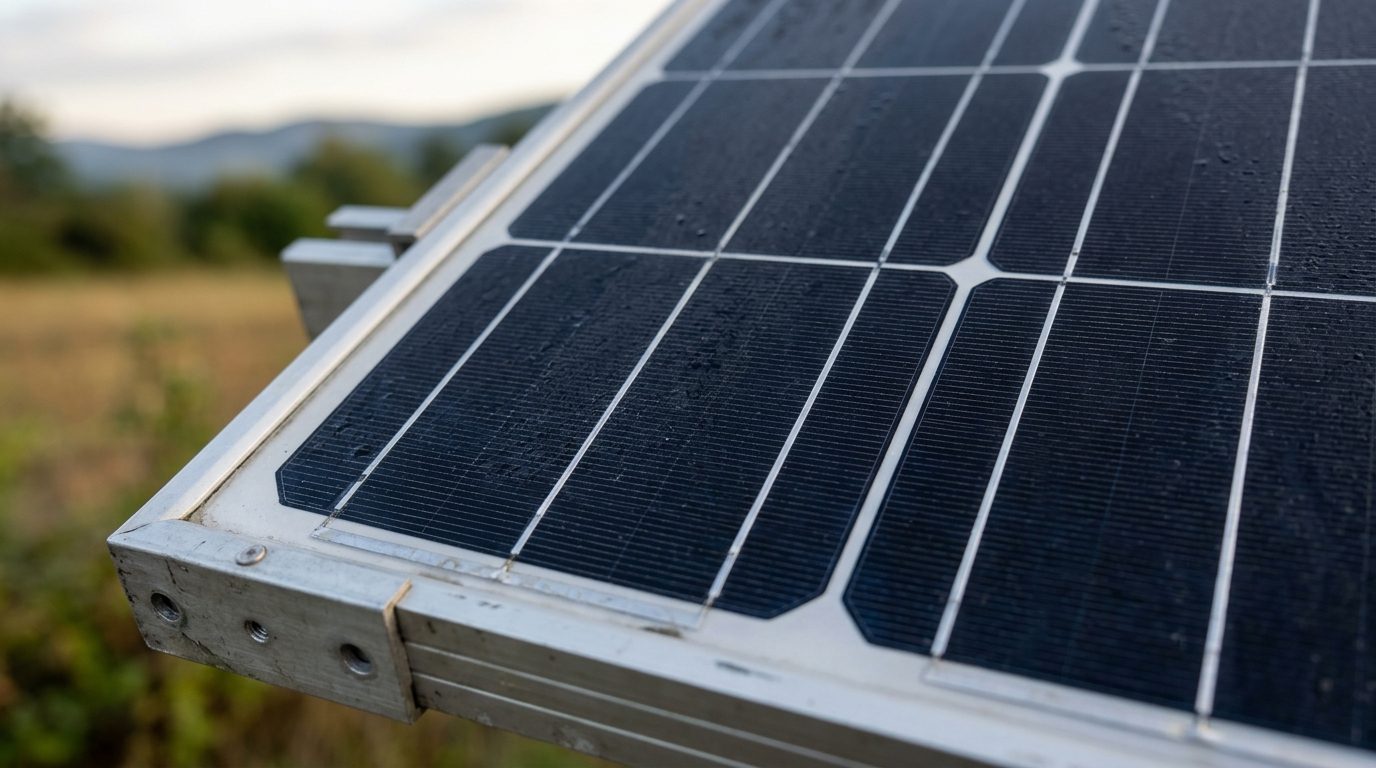
The cells are 182 mm monocrystalline PERC, half-cut, with multi-busbar ribbon and tiling ribbon. Jinko described that cell efficiency as 21.4%. Published module ratings across the series run from 395 W to 585 W. Tiger Neo, the N-type successor, launched on November 2, 2021.
Which Jinko Tiger Pro is in your quote?
Check the suffix before you compare the price. Jinko launched four variants on May 15, 2020, pv magazine Australia reported the next day: a 580 W 78TW, a 530 W 72TR, a 530 W 72HC and a 430 W 60TR, with production planned for the fourth quarter of 2020. The 54HC, at 395–415 W, followed on March 30, 2021. Wattage is the number in the code. The letters after it are the family.
| Code | Version | Cells | Typical use |
|---|---|---|---|
| 54HL4 | 54HC | 108 half-cut cells, 182 mm, 54-cell layout | Residential and other distributed PV. Five bins, 395–415 W. |
| 6TL4 | 60TR | 60TR | Distributed generation. JKM440M-6TL4 is the 440 W code. |
| 60HL4 | 60HC | — | No datasheet in this set. Keep it off the 6TL4 row. |
| 72HL4 | 72HC | Half-cut 72-cell design | JKM550M-72HL4-V is the 550 W sheet. |
| 72TR | 72TR | — | Launch variant, listed at 530 W. |
| 78TW | 78-cell | 156 cells of 182 × 182 mm | Large format. Five bins, 565–585 W, in the July 2020 spec. |
| -V | Suffix not defined in the sources | — | Printed on the 415 W and 550 W codes above. JKM440M-6TL4 is printed without it. |
| TB | Bifacial 72HC | DuPont Tedlar back film on the current 535 Wp listing | Bifacial quotes. |
Glass and frame live in the mechanical block, not in a suffix on these codes. For the 54HC, the March 2021 rooftop report lists 3.2 mm tempered glass and an IP68 junction box. For the 78-cell, pv magazine’s July 2020 closer look lists 3.2 mm tempered AR-coated glass, an anodized aluminum frame and an IP68 box. Glass thickness on the 440 W and 550 W excerpts has to come from the PDF on the quote.
Jinko’s Tiger Pro page describes the series hardware as half-cut cells, a 10-busbar circular ribbon, and tiling ribbon. A code ending in 78TR is not among these sheets. The large-format documents on hand are the 78TW launch variant and the 78-cell monofacial spec. The wider current lineup is on the models page.
What are the Jinko Tiger Pro 415W, 440W and 550W specs?
STC figures below are from Jinko’s datasheets for the three part numbers. A second revision of the 440 W sheet sits about 0.1 V off this one: Vmp 33.72 V, Imp 13.05 A, Voc 41.02 V, Isc 13.73 A. Use the sheet attached to the quote.
| Model | Pmax (W) | Vmp (V) | Imp (A) | Voc (V) | Isc (A) | Size (mm) | Efficiency (%) | Max series fuse (A) | Voc temp. coefficient (%/°C) | Product warranty (years) |
|---|---|---|---|---|---|---|---|---|---|---|
| JKM415M-54HL4-V | 415 | 30.79 | 13.48 | 37.31 | 14.01 | 1134 × 1722 | — | 25 | −0.28 | 15 |
| JKM440M-6TL4 | 440 | 33.82 | 13.01 | 40.92 | 13.69 | 1134 × 1868 | — | 25 | −0.28 | 12 |
| JKM550M-72HL4-V | 550 | 40.90 | 13.45 | 49.62 | 14.03 | 1134 × 2278 | 21.29 | 25 | −0.28 | 12 |
All three datasheets list NOCT at 45 °C. The 550 W efficiency, 21.29%, is the 550 W bin on Jinko’s 550–570 W 72HL4 datasheet. The 54HC family spans 20.28–21.3% from 395 W to 415 W, so the table leaves the 415 W cell blank rather than pinning 21.3% on that bin alone. The 440 W excerpt has no efficiency. The datasheet does not say.
Length of the 415 W module is 1,722 mm on the datasheet excerpt and 1,718 mm in pv magazine’s March 30, 2021 rooftop report (1,718 × 1,134 × 30 mm, and 22 kg, for the 54HC). Four millimeters changes clamp position. Lay the rails out from the drawing on your quote. That same report gives the 54HC electrical spread as Voc 36.9–37.31 V and Isc 13.71–14.01 A. A 395 W bin is a different row from the 415 W.
The 440 W datasheet lists a power temperature coefficient of −0.35 %/°C alongside the Voc coefficient of −0.28 %/°C. The 415 W and 550 W excerpts print the Voc coefficient and do not restate the power coefficient. PV Tech wrote in May 2020 that Tiger Pro was, at the time, the only module series offering 550 W and above.
What is the Jinko Tiger Pro 440W?
JKM440M-6TL4 is the 440 W 60TR, 1134 × 1868 mm, with a 12-year product warranty and a 25-year performance warranty on the datasheet. Jinko aimed the 60TR at distributed generation. At launch that format was listed at 430 W. It is longer than the 54HC and shorter than the 72HC. Maximum system voltage is missing from the excerpt, and the code has no -V, so read that line on the PDF before you treat the pallet as a 1500 V module.
What system does the Tiger Pro fit?
The 54HC is the Tiger Pro sized for a house. The March 2021 report puts it at about 1.7 × 1.1 m and 22 kg, with a 1,500 V maximum system voltage and an operating range of −40 to 85 °C. Jinko said the 54-cell module suits distributed PV, from commercial and industrial rooftops to homes, including areas with high snow or wind loads, and that “The Tiger Pro modules continue to meet the needs of most residential customers.” No pascal snow or wind rating came with that description.
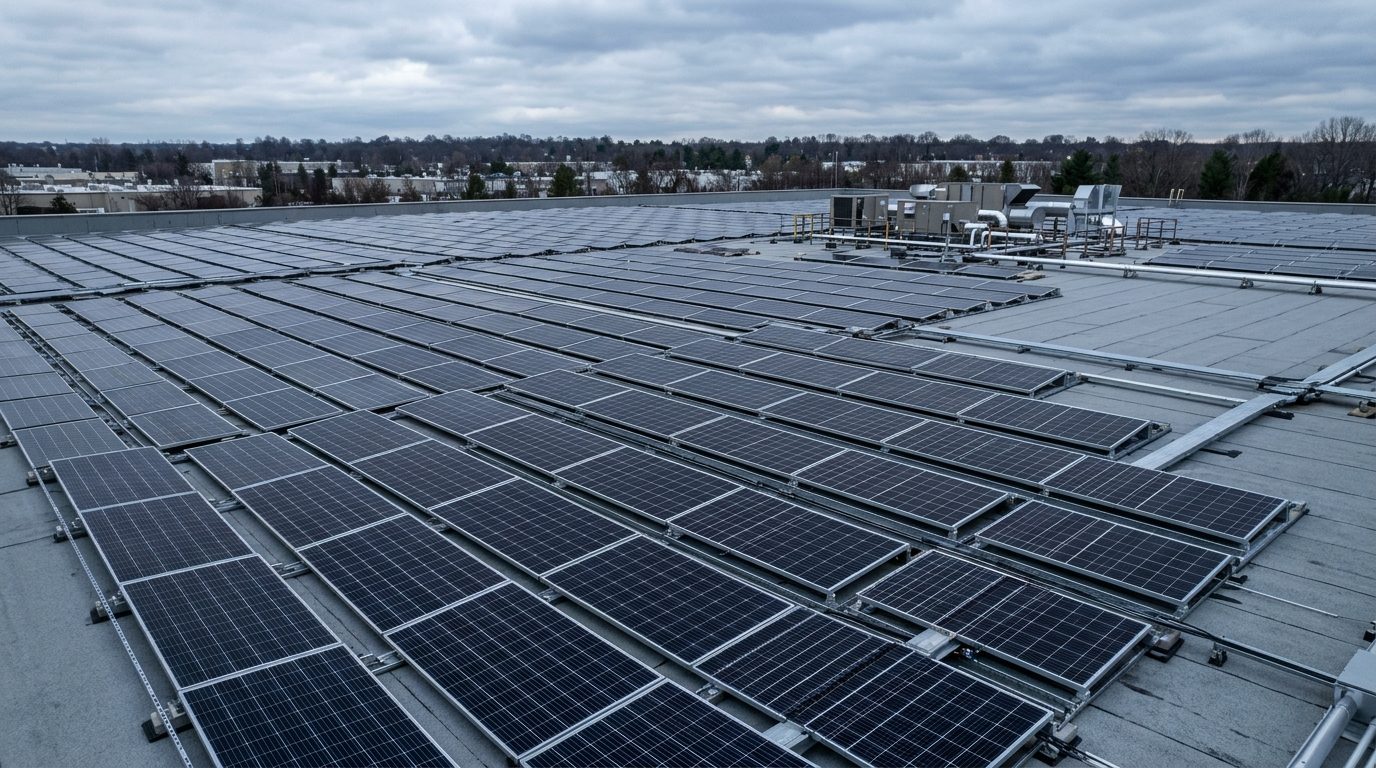
For a typical home roof, buy the 54HC. The condition that flips the choice is a layout already drawn around a module about 2.3 m long, on a roof that can carry it, with a string count that still fits the inverter.
The 72HC and the 78-cell are the larger formats. JKM550M-72HL4-V measures 1134 × 2278 mm. pv magazine’s July 2020 closer look puts the 78-cell monofacial at 2,411 × 1,134 × 35 mm and 31.1 kg, in five versions from 565 to 585 W at 20.67–21.40% efficiency, maximum system voltage 1,500 V, operating range −40 to 85 °C. The 440 W 60TR, at 1,868 mm, stays in the distributed-generation class between those two.
How many Tiger Pro panels fit on a 600 V inverter?
Cold air raises Voc. This count uses a −10 °C record low, which is 35 °C under the 25 °C STC point, and the datasheet Voc coefficient of −0.28 %/°C. The factor is 1 + 35 × 0.0028 = 1.098. Divide the inverter’s maximum input voltage by cold Voc and round down. Your record low, and the inverter’s own limits, govern.
| Model | STC Voc (V) | Voc at −10 °C (V) | Modules on 600 V | Modules on 1500 V |
|---|---|---|---|---|
| JKM415M-54HL4-V | 37.31 | 41.0 | 14 | 36 |
| JKM440M-6TL4 | 40.92 | 44.9 | 13 | 33 |
| JKM550M-72HL4-V | 49.62 | 54.5 | 11 | 27 |
For the 440 W, 40.92 × 1.098 is 44.9 V, and 600 / 44.9 is 13.4, so 13 modules. The other 440 W revision, Voc 41.02 V, still lands on 13 at this temperature: 41.02 × 1.098 is 45.0 V, and 600 / 45.0 is 13.3. The 415 W rises to 41.0 V (37.31 × 1.098), and 600 / 41.0 is 14.6, so 14 modules. The 550 W rises to 54.5 V (49.62 × 1.098). Eleven times 54.5 V is 599.5 V, under a 600 V cap, so 11 modules. Twelve would be 654 V. On a 1500 V inverter, 27 × 54.5 V is 1,471.5 V and 28 × 54.5 V is 1,526 V, so the count is 27. The same division gives 36 of the 415 W (1500 / 41.0 = 36.6) and 33 of the 440 W (1500 / 44.9 = 33.4).
A module with a 1500 V rating can sit on a 600 V residential inverter. The panel rating is the module ceiling. The inverter’s maximum input voltage is the cap.
Jinko’s own June 2020 design note, published by PV Tech, ran a different case: a 530 W bifacial Tiger Pro, Voc 49.5 V at STC, a 0 °C low, the IEC 62548 method, up to 28 modules on a 1500 V string. A milder record low moves the count. Rerun the arithmetic with the low temperature on your permit set.
Imp is the other limit. These monofacial sheets list 13.48 A (415 W), 13.01 A (440 W) and 13.45 A (550 W). In that design note Jinko wrote that “the maximum input current of MPPT of mainstream string inverters is 26A” and that bifacial module current may exceed 13 A with more than 30% rear gain. Check the inverter’s maximum input current, and the maximum input current of any module-level device on the quote, against the Imp on your sheet.
What warranty does the Jinko Tiger Pro have?
Product warranty on the 2020–2021 datasheets is 15 years for the 54HC, including JKM415M-54HL4-V. It is 12 years for the 72HC, the 78-cell and JKM440M-6TL4. Power coverage on those sheets is 25 years: 2% in the first year, then at most 0.55% per year from year 2 through year 25. pv magazine reported that schedule for the 78-cell in July 2020, and PV Tech reported it for the 54-cell module in March 2021.
Jinko’s line on the 54-cell module, in the PV Tech note of March 30, 2021, is that it “offers an industry best 15-year product warranty and 25-year linear warranty.”
Jinko’s Tiger Pro page, seen November 2026, prints a “30 Year Linear Power Warranty” on the 72HC monofacial and the 72HC bifacial. The page does not print a year-30 percentage or the annual step. The warranty PDF in the quote is the term you are buying. If that PDF still reads 25 years at 2% then 0.55%, that is the schedule on the sale.
Jinko Tiger Pro vs Tiger Neo: what is the difference?
Tiger Pro is p-type PERC. Tiger Neo is N-type TOPCon. Jinko told pv magazine in July 2020 that it expected Tiger Pro to overtake the 475 W Tiger as its main revenue line in 2022. The successor flagship launched on November 2, 2021. Module-by-module Neo specs are on the Tiger Neo page.
| Tiger Pro | Tiger Neo | |
|---|---|---|
| Cell type | P-type mono PERC | N-type TOPCon |
| Top power at launch | 580 W (May 15, 2020) | Up to 620 W |
| Efficiency | 21.4% cell figure at launch; 78-cell modules 20.67–21.40%; 550 W module 21.29% | 22.30% |
| Power temperature coefficient | −0.35 %/°C | −0.30 %/°C |
| First-year degradation | 2% | Claimed under 1% |
| Output guaranteed at year 30 | 2020–2021 sheets end at year 25. The current 72HC page says 30 years and states no year-30 percentage. | No less than 87.40% of nominal |
The Neo column is the November 2, 2021 launch release: N-type TOPCon, up to 620 W, 22.30% efficiency, −0.30 %/°C against −0.35 %/°C for p-type, first-year degradation claimed under 1%, and no less than 87.40% of nominal after 30 years.
Take the Tiger Pro quote when the new modules have to match a p-type PERC array already on the roof, same family, Imp in the same band, and the price is the one the job can carry. Ask for Tiger Neo when the site runs hot or you expect to own the system out to year 30. Those are the conditions that make −0.30 %/°C, a first-year loss under 1%, and the 87.40% floor matter more than staying with the older pallet.
Is the Jinko Tiger Pro discontinued?
Jinko’s Tiger Pro page, seen November 2026, lists two modules: the 72HC monofacial at 540 Wp and 21.35% efficiency, and the 72HC bifacial (TB) at 535 Wp and 21.16% with a DuPont Tedlar back film. Both show a 30-year linear power warranty. The header on that page still claims 585 W and “Ultra-high Efficiency of 21.4%.” The 415 W 54HC, the 440 W 60TR and the 550 W JKM550M-72HL4-V are absent from the list. No end-of-production date is printed there, and warehouse stock is outside these sources.
What replaces a Tiger Pro, and which current module matches an old string for size and voltage, is on the discontinued models page.
FAQ
Is the Jinko Tiger Pro bifacial?
The TB version is. Mono and bifacial versions both existed at the May 2020 launch, and Jinko’s current page lists a 72HC bifacial (TB) at 535 Wp with a DuPont Tedlar back film. JKM415M-54HL4-V, JKM440M-6TL4 and JKM550M-72HL4-V are the monofacial datasheets. A code without TB is the monofacial build.
Is the Jinko Tiger Pro a good panel?
Yes for a home roof when the code is the 54HC: about 1.7 m, 22 kg, a 15-year product warranty and a 25-year power schedule. Walk away when the quote is a 2.3 m 72HC on a small roof, or when the real comparison is a hot site held to year 30. That second case is Tiger Neo. More on the brand is on the Jinko Solar Panels home page.
What is the Jinko Tiger Pro temperature coefficient?
Power and Voc are different numbers. Power is −0.35 %/°C on the 440 W datasheet, and that is the p-type figure in the Tiger Neo launch comparison (−0.30 %/°C for Neo). Voc is −0.28 %/°C on the 415 W, 440 W and 550 W datasheets. Use the Voc coefficient for a cold string. Use the power coefficient when you are judging output on a hot afternoon.
Can a Tiger Pro share a string with a Tiger Neo?
A series string has to match current, and this page cannot check a mix. Tiger Pro Imp on these sheets is 13.01 A (440 W), 13.48 A (415 W) and 13.45 A (550 W). Voc is 40.92 V, 37.31 V and 49.62 V. Tiger Neo’s Imp and Voc are on the Neo datasheet, not here. Inside Tiger Pro, add each module’s own cold Voc and set the Imp values side by side before two families share a string. The 415 W and the 550 W sit 0.03 A apart on Imp and 12.31 V apart on Voc (37.31 V against 49.62 V).
Check on your quote
Before you pay, match the packet to the sheet on these five points.
- Read the full code: 54HL4, 6TL4 or 72HL4, and whether -V or TB is printed.
- Take Voc, Imp and the warranty years from the PDF on the quote. Revisions of JKM440M-6TL4 differ by about 0.1 V.
- Rerun the string count at your record low, and stay under the inverter’s maximum input voltage.
- Set Imp, 13.01 A to 13.48 A on these three sheets, against the inverter’s maximum input current and against any module-level device on the quote.
- See whether the power warranty in the packet is 25 years at 2% then 0.55% per year, or the 30-year line on Jinko’s current 72HC page.