Short answer: For a US home roof, the best current Jinko panel is the EAGLE G6R (JKM420-440N-54HL4-B): 420–440 W, 1722 × 1134 mm, 22 kg, 1000 VDC. The EAGLE G7B (JKM615-640N-66HL4M-BDV) is the highest-wattage module in Jinko US’s current datasheets, at 640 W, and the 580–600 W G6B and G6X are 2278 mm bifacial panels for ground mounts and commercial roofs.
Updated: November 2026. US figures below come from the four current module datasheets on Jinko US’s download center: EAGLE G7B JKM615-640N-66HL4M-BDV-F1-US (uploaded September 2025), EAGLE G6X JKM580-600N-72HL4-BDX-F30R-F2-US (September 2024), EAGLE G6B JKM580-600N-72HL4-BDV-F30R-F3-US (September 2024) and EAGLE G6R JKM420-440N-54HL4-B-R-F2-US (August 2023). Global codes on this page were checked the same month, including installation manual A1.8 (May 2026) and a TAC module file copyrighted 2026.
Which Jinko solar panels are sold in the US now?
Jinko US’s download center has current datasheets for four EAGLE modules: the G7B, G6X, G6B and G6R. The EAGLE 66TR G4, 72HM G2 and 72 G5b are filed there as stored or archived.
| Model | JKM code | Power (W) | Efficiency (%) | Cells | Size (mm / in) | Weight (kg / lb) | Voc top bin (V) | Max system voltage (VDC) | Temp. coeff. Pmax (%/°C) | Bifacial factor | Product / power warranty (years) |
|---|---|---|---|---|---|---|---|---|---|---|---|
| EAGLE G7B | JKM615-640N-66HL4M-BDV | 615–640 | 22.77–23.69 | 132 half (2×66) | 2382 × 1134 × 30 / 93.77 × 44.65 × 1.18 | 32.4 / 71.42 | 49.88 | 1500 | -0.29 | 80 ±5% | 12 / 30 |
| EAGLE G6X | JKM580-600N-72HL4-BDX | 580–600 | 22.45–23.23 | 144 half (2×72) | 2278 × 1134 × 30 / 89.69 × 44.65 × 1.18 | 37.7 / 83.11 | 53.30 | 1500 | -0.29 | 80 ±5% | 12 / 30* |
| EAGLE G6B | JKM580-600N-72HL4-BDV | 580–600 | 22.45–23.23 | 144 half (2×72) | 2278 × 1134 × 30 / 89.69 × 44.65 × 1.18 | 31 / 68.34 and 32 / 70.55 | 53.30 | 1500 | -0.29 | 80 ±5% | 12 / 30 |
| EAGLE G6R | JKM420-440N-54HL4-B | 420–440 | 21.51–22.53 | 108 half (2×54) | 1722 × 1134 × 30 / 67.79 × 44.65 × 1.18 | 22 / 48.50 | 39.57 | 1000 | -0.29 | — | 25 (datasheet) or 12 (page) / 30 |
Those four files are the current set on the Jinko US download center. Jinko US’s site also names an EAGLE G7 and an EAGLE G6. Only the G7B has a G7 datasheet. G6 has no sheet of its own.
The EAGLE Modules page calls G7B the G7 sub-model, and G6X, G6B and G6R the G6 sub-models. It describes the G7 as using “our latest flagship TOPCon cell technology, featuring record breaking cell efficiencies of over 26%.” That page gives no module specs. On the G7B datasheet, module efficiency is 22.77% at 615 W and 23.69% at 640 W.
The G6B datasheet lists the weight twice: 31 kg (68.34 lb) and 32 kg (70.55 lb). The G6R main table is a 30 mm frame at 22 kg (48.50 lb); an alternate table on that sheet lists a 35 mm frame and 21.0 kg. Top-bin current is Isc 16.32 A, Vmp 41.30 V and Imp 15.50 A on the 640 W G7B. The 600 W G6B and G6X list Isc 14.19 A. The 440 W G6R lists Isc 13.80 A.
\*The G6X power term is the 30-year linear warranty on the Jinko US G6X page. No yearly loss rate for the G6X is stated on this page. The G6R product term is 25 years on the F2-US datasheet and 12 years on the Jinko US G6R page.
How do I read a Jinko JKM model number?
JKM440N-54HL4-B splits into a prefix, a wattage, a cell letter, a cell count, a half-cell mark and a construction suffix. The sources checked here contain no official legend, and installation manual A1.8 (May 2026) does not add one. Match each piece to Jinko’s download-center labels and to the cell layout printed on the datasheet.
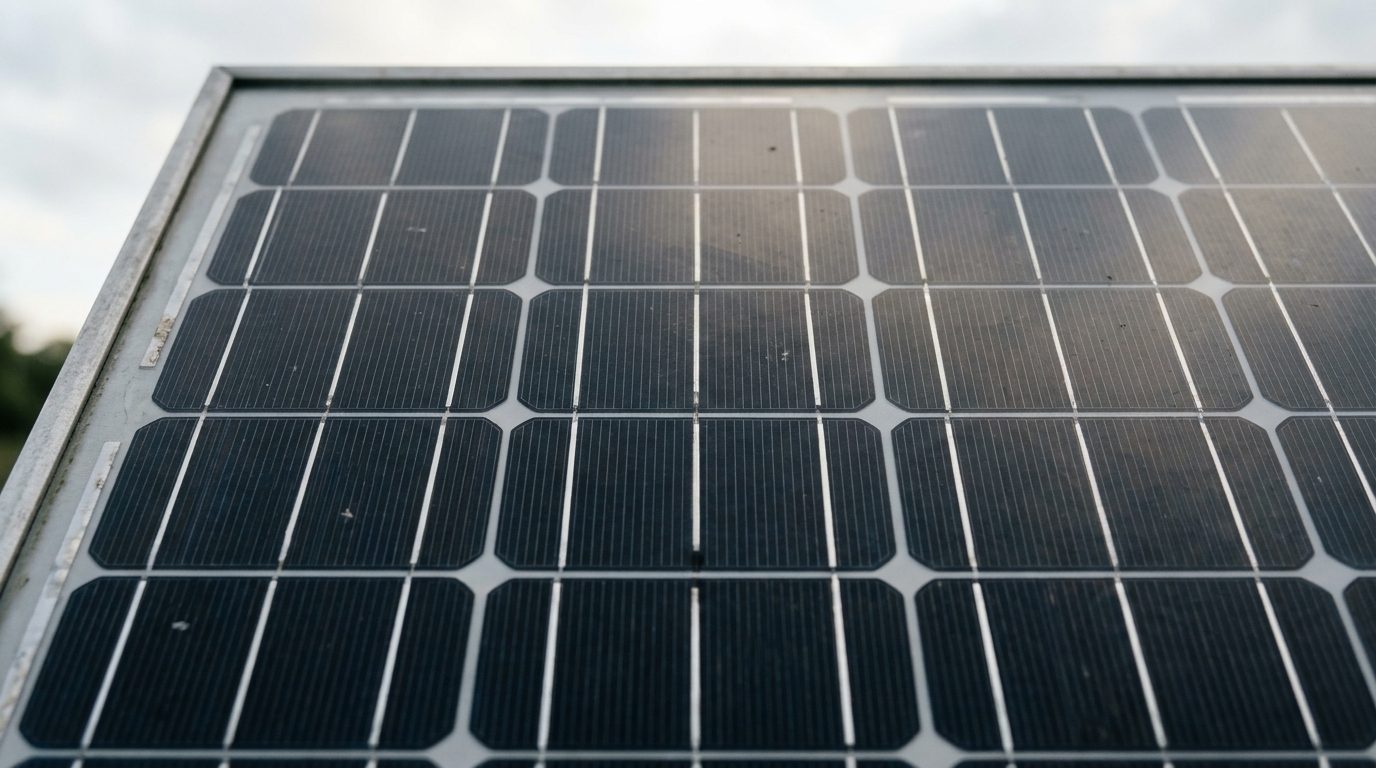
| Part | Example | What it means | Where it is confirmed |
|---|---|---|---|
| Prefix | JKM | Opening of the module code | Every code on these US and global sheets |
| Power | 440, or 420-440 | STC watts of one bin, or the family range on the sheet | G6R sheet: JKM420N to JKM440N-54HL4-B, 420–440 Wp |
| Cell letter | N | N-type. The G7B sheet says N-type TOPCon. The G6 sheets say N-type mono | G7B, G6X, G6B and G6R datasheets |
| Cell letter | M | P-type mono, when M sits immediately after the watts | Archived EAGLE 66TR G4, JKM370-390M-6RL3-B |
| Cell letter | T | Appears in the TAC module code, and Jinko does not define the letter. The label calls the module N-type TAC | “N Type 48 Cell ALL-Black TAC Module” on JKM485-510T-48HL6M-DB |
| Cell count | 54, 66, 72, 48 | Count on one half of these half-cell modules. 54 means 108 cells (2×54), 66 means 132, 72 means 144, 48 means 96 (48×2) | Cell layouts on the G6R, G7B, G6B, G6X and TAC sheets |
| HL4 | 54HL4 | Half cell | Global label “N-Type 66 Half Cell Bifacial Module With Dual Glass” on JKM625-650N-66HL4M-BDV. The G6R sheet says 108 half cells |
| QL6 | 66QL6 | Quarter cell | Global label “N-Type 66 Quarter Cell Bifacial Module With Dual Glass” on JKM650-670N-66QL6-BDV |
| Sheet tail | -F2-US | File-name tail on the datasheet; Jinko does not define it in these sources | G7B file ends -F1-US, G6R and G6X end -F2-US, G6B ends -F3-US |
A later M, as in 66HL4M, is a different slot from the cell-type letter. The G7B is coded JKM615-640N-66HL4M-BDV, and that datasheet still calls the cells N-type TOPCon. The global label for JKM625-650N-66HL4M-BDV still says N-type. The datasheet does not define the M inside HL4M.
G6B and G6X filenames also carry -F30R ahead of -F3-US or -F2-US. The sheets do not define -F30R.
| Suffix | Example | What Jinko pairs with it |
|---|---|---|
| -B | JKM440N-54HL4-B | Black frame and black backsheet on the G6R datasheet |
| -DV | JKM525-545N-54QL6-DV | Label: “N-Type 54 Monofacial Module With Dual Glass” |
| -DB | JKM450-475N-48HL4M-DB | Label: “N-Type 48 All Black Monofacial Module With Dual Glass” |
| -BDV | JKM615-640N-66HL4M-BDV | Bifacial dual glass. The US G7B and G6B sheets use this suffix |
| -BDX | JKM580-600N-72HL4-BDX | G6X: bifacial dual glass with EAGLE Talon glass, headed as an extreme-weather module |
Imported stock can show a global code instead of an EAGLE name. Jinko’s global download center labels the files in plain words:
| Code | Label on the global download center | Power (W) |
|---|---|---|
| JKM710-735N-66HL5-BDV | 66 half-cell bifacial dual-glass module; highest-power entry on that list | 710–735 |
| JKM650-670N-66QL6-BDV | “N-Type 66 Quarter Cell Bifacial Module With Dual Glass” | 650–670 |
| JKM625-650N-66HL4M-BDV | “N-Type 66 Half Cell Bifacial Module With Dual Glass” | 625–650 |
| JKM525-545N-54QL6-DV | “N-Type 54 Monofacial Module With Dual Glass” | 525–545 |
| JKM485-510T-48HL6M-DB | “N Type 48 Cell ALL-Black TAC Module” | 485–510 |
| JKM450-475N-48HL4M-DB | “N-Type 48 All Black Monofacial Module With Dual Glass” | 450–475 |
The 54QL6-DV label says monofacial dual glass. It does not say quarter cell. The quarter-cell wording is on the 66QL6 label. HL6, on the TAC code 48HL6M, is not spelled out on that label. The TAC datasheet does state 96 cells (48×2).
What is the Jinko 54HL4?
JKM440N-54HL4-B is the 440 W bin of the EAGLE G6R.
- JKM is the prefix on the module code.
- 440 is the top STC bin. The sheet lists models JKM420N to JKM440N-54HL4-B, 420–440 W. Efficiency is 22.53% at 440 W and 21.51% at 420 W. Between those two figures the sheet lists 21.76%, 22.02% and 22.28%.
- N means N-type mono cells on this datasheet.
- 54HL4 means 108 half cells, written as 2×54. HL4 is the half-cell mark on Jinko’s global “Half Cell” labels.
- -B means the black frame and black backsheet specified for this module.
The same 440 W row gives Voc 39.57 V and Isc 13.80 A. Maximum system voltage is 1000 VDC. Size in the main table is 1722 × 1134 × 30 mm (67.79 × 44.65 × 1.18 in), at 22 kg (48.50 lb). Check the frame depth on your quote. An alternate table lists 35 mm and 21.0 kg.
The download center’s family code adds an -R: JKM420-440N-54HL4-B-R. The bin lines on the sheet leave that -R off. Same G6R family. The -F2-US tail is part of the datasheet file name, and the file was uploaded August 2023.
If you are replacing a module in a row already on the roof, match length and Voc, not only the characters 54HL4. This G6R is 1722 mm long, with a 39.57 V top-bin Voc and a 1000 VDC maximum. The global list also has JKM525-545N-54QL6-DV, labeled as an N-type 54 monofacial dual-glass module. That is a different construction. The G6R sheet does not give its length.
Which Jinko panel is best for which job?
For a home roof in the US, pick the EAGLE G6R when the string stays within 1000 VDC. It is the 1722 mm, 22 kg, 420–440 W module, with a black frame and black backsheet. Jinko’s G6R page says the black backsheet and frame “create ideal look for residential applications.”
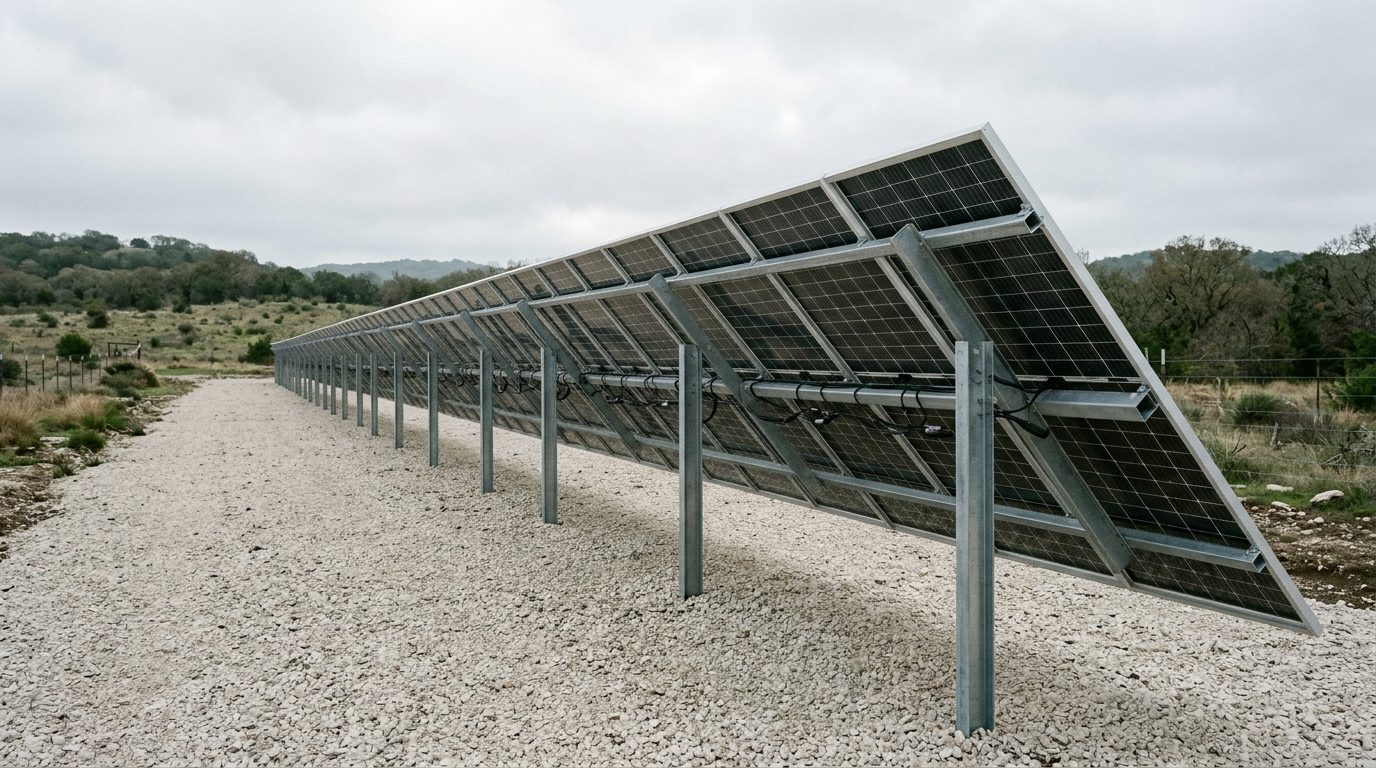
Pick the G7B when the job is the most watts per module on a ground mount or a commercial roof, and the system is 1500 VDC and can take a 2382 × 1134 mm module at 32.4 kg (71.42 lb). The top bin is 640 W at 23.69%. The cells are N-type TOPCon, 132 half cells, and the sheet rates the module bifacial.
Between the two 580–600 W panels, pick the G6X when you need the weather tests on that sheet. Jinko heads it as an extreme-weather module with EAGLE Talon glass on both faces, static test loads of 6000 Pa front and 5400 Pa rear, and a hail test of 55 mm stones at 33.9 m/s. Fire rating is Type 30 under UL and Class A under IEC. At 37.7 kg (83.11 lb) it is the heaviest module in this US set, so check the rack for that weight. Installation manual A1.8 (May 2026) also assigns Class A to codes of the form JKM xxx N-72HL4-BDX and JKM xxx N-66HL4M-BDX.
Pick the G6B when the quote does not require the Talon glass, the 55 mm hail test or the 6000 / 5400 Pa loads. You get the same 580–600 W and the same 2278 × 1134 mm bifacial dual-glass module, suffix BDV, at the lower weight the sheet lists (31 kg in one block, 32 kg in another). It is a 1500 VDC module, like the G6X and the G7B.
The bifacial factor on those sheets is a lab rating. None of the four US datasheets states how many extra kilowatt-hours the rear face will add on a roof. If the back of the module cannot see light, the G6R is the module that matches the job.
What is the highest-wattage Jinko solar panel?
The highest-wattage Jinko solar panel in the current US datasheets is the EAGLE G7B, at 640 W and 23.69% module efficiency.
Jinko’s global download center lists a higher entry, JKM710-735N-66HL5-BDV, a 710–735 W, 66 half-cell, bifacial dual-glass module. That file is not on the Jinko US download center. The Tiger Neo 3.0 page states 670 W output, 24.8% module efficiency and 27% cell efficiency for datasheet JKM650-670N-66QL6-BDV. The page’s targeting excludes the US region.
The highest module efficiency in these files sits on a smaller all-black panel, the global TAC module JKM485-510T-48HL6M-DB. The sheet lists 25.52% at 510 W and 24.27% at 485 W, 96 N-type cells (48×2), 1762 × 1134 × 30 mm and 22.0 kg. Maximum system voltage is 1500 VDC under IEC. The Pmax temperature coefficient is -0.24%/°C. Power loss is stated as 1% in year 1 and 0.35% per year after. Jinko US does not list this module. Confirm 25.52% on the PDF before you put it in a bid.
| Model | Market | Power (W) | Efficiency | Size (mm) |
|---|---|---|---|---|
| EAGLE G7B, top bin | US current datasheet | 640 | 23.69% module | 2382 × 1134 × 30 |
| JKM710-735N-66HL5-BDV | Global download center; not a Jinko US current file | 710–735 | — | — |
| Tiger Neo 3.0, JKM650-670N-66QL6-BDV | Global page; US region excluded | 670 | 24.8% module, 27% cell | — |
| JKM485-510T-48HL6M-DB, top bin | Global; not on the Jinko US list | 510 | 25.52% module | 1762 × 1134 × 30 |
The “over 26%” line on the EAGLE Modules page, and the 27% line on Tiger Neo 3.0, are cell efficiencies. Compare modules with the module efficiencies in this table.
What types of Jinko solar panels are there?
The four current US EAGLE datasheets are N-type modules. The G7B sheet says N-type TOPCon. The G6R and G6B sheets say N-type mono, and the G6X code carries the N. All four list a Pmax temperature coefficient of -0.29%/°C.
M immediately after the wattage is the older P-type mono code. The archived EAGLE 66TR G4, JKM370-390M-6RL3-B, uploaded February 2022, is the example on Jinko US’s site. It is a P-type mono module with Tiling Ribbon, 132 half-cut cells (2×66), 370–390 W, 19.38–20.43% efficiency, 1855 × 1029 × 35 mm, 21.5 kg, 1000 VDC and -0.35%/°C. Product warranty is 12 years. Power warranty is 25 years: 98% in year 1, then at most 0.55% loss per year. A quote that still shows JKM370M-6RL3-B is that archived module.
Current N-type US sheets list -0.29%/°C and a 30-year power warranty, capped at 0.4% loss per year after year 1.
Bifacial dual glass is BDV on the G7B and the G6B, and BDX on the G6X. Each of those three US sheets lists a bifacial factor of 80 ±5%. All-black in the current US list is the G6R suffix -B: black frame, black backsheet, and no bifacial factor on the sheet. Global -DB labels say all-black. The JKM450-475N-48HL4M-DB label adds dual glass, while JKM485-510T-48HL6M-DB is labeled an all-black TAC module. A -DV label, JKM525-545N-54QL6-DV, is monofacial dual glass, and the label does not say all-black.
Where are Jinko solar panels made?
Jinko US says EAGLE modules come from facilities in Vietnam, Malaysia and Florida. The About page states “EAGLE® Modules come from facilities in Vietnam, Malaysia, and Florida” and lists US manufacturing at 4660 POW MIA Memorial Pkwy, Jacksonville, FL.
JinkoSolar’s FY2024 Form 20-F says the company “established our first U.S. factory in Jacksonville, Florida, which commenced production in the third quarter of 2018,” and that this factory “reached full production capacity of 400 MW in the first half of 2019.” The filing says solar modules are also produced in Jiangxi, Zhejiang, Anhui and Shanxi Provinces in China. It describes a 7 GW wafer plant in Vietnam that started production in the first quarter of 2022.
Jinko does not say which EAGLE model comes from which plant. Read origin off the pallet paperwork when it matters. Global headquarters is in Shanghai. US sales and operations are in Campbell, California.
What warranty comes with current Jinko panels?
The G7B and G6B datasheets list a 12-year product warranty and a 30-year linear power warranty: no more than 1% loss in year 1, no more than 0.4% per year after that, and 87.4% or more of rated power at year 30. Those caps add up to 12.6 percentage points over 30 years (1% plus 0.4% × 29), which matches the 87.4% floor printed on the sheets.
The G6X datasheet states a 12-year product warranty. Jinko US’s G6X page states a 12-year product warranty and a 30-year linear power warranty. No yearly loss percentage for the G6X is given here.
The G6R documents disagree on the product term. The G6R F2-US datasheet lists a 25-year product warranty and a 30-year linear power warranty with the same schedule: ≤1% in year 1, ≤0.4% per year after, ≥87.4% at year 30. The Jinko US G6R page instead states a 12-year product warranty and a 30-year linear power warranty.
Ask for the warranty document that comes with the purchase. On a G6R quote, compare that document with both numbers already in print: 25 years on the August 2023 F2-US datasheet, and 12 years on the product page.
Is Tiger Neo sold in the US?
Jinko US does not list Tiger Neo as a current module name. The current US names on the download center are the EAGLE modules above. The Tiger Neo 3.0 page excludes the US region.
In February 2022, JinkoSolar announced what PV Tech quoted as “The first 480-watt panel for the residential market,” a 60-cell Tiger Neo with N-type cells and efficiency up to 22.24%, plus a compact 54-cell 430 W version. That announcement is not one of the four current US datasheets. If the quote says Tiger Neo, decode the JKM code and match it to a datasheet.
Is the EAGLE G6R the same as the Tiger Neo 54HL4?
The EAGLE G6R uses JKM420N to JKM440N-54HL4-B, so the string 54HL4 matches. The G6R datasheet titles the module EAGLE G6R and does not call it Tiger Neo. Treat a panel as this G6R only when the full code, the length and the voltage match the sheet: 1722 × 1134 mm, Voc 39.57 V at the 440 W bin, 1000 VDC, black frame and black backsheet.
Where is the serial number on a Jinko panel?
The serial number and barcode are laminated into the module. Jinko’s Global Installation Manual A1.8 (May 2026) says the label is “laminated inside the module permanently” and “can be normally found in the front side of its corners, and in the middle of the rear side of the module.” That manual has no legend for the letters in the model code.
What does -B mean on a Jinko panel?
On the current G6R, -B means the black frame and black backsheet specified for JKM420-440N-54HL4-B. The sources checked here contain no suffix legend, and the installation manual does not define -B. The archived JKM370-390M-6RL3-B also ends in -B. Its listed specs do not give a frame color, so do not treat every trailing -B as all-black.
Check on your quote
- Match the full JKM code on the quote to the label: the letter after the wattage, the cell count, HL4 or QL6, and the suffix (B, DV, DB, BDV or BDX).
- Check length, frame depth and weight. The G6R main table is 1722 × 1134 × 30 mm and 22 kg, with an alternate line at 35 mm and 21.0 kg. The G6B sheet lists both 31 kg and 32 kg.
- Check maximum system voltage against the inverter: 1000 VDC on the G6R, 1500 VDC on the G7B, G6B and G6X. Top-bin Voc is 39.57 V on the 440 W G6R, 49.88 V on the 640 W G7B, and 53.30 V on the 600 W G6B and G6X.
- Ask for the warranty document that ships with the modules. On the G6R, the F2-US datasheet says 25 years product and the Jinko US page says 12.
- Read the factory off the pallet paperwork if origin matters. Jinko does not assign the G6R, G6B, G6X or G7B to a plant.
A new US model joins this lineup when Jinko US posts a new current datasheet. These four files are the current set as of November 2026.