Short answer: Jinko Tiger Neo is JinkoSolar’s N-type TOPCon module line, launched in November 2021. On a US home quote the name can refer to the JKM4xxN-54HL4R-B, a 420–440 W all-black panel that Jinko’s US catalog sells as the EAGLE G6R.
Updated: November 2026
PV Tech’s report of that launch put mass production at up to 620 W and up to 22.3% efficiency, using multi-busbar half-cut cells on 182 mm wafers. The same report described the series as aimed at large-scale utility projects. A house quote is a smaller code. Jinko’s US site sells these N-type TOPCon modules under EAGLE names and does not use the words Tiger Neo.
Which Tiger Neo is in your quote?
Read the JKM code on the quote before you compare wattages. One residential string is JKM440N-54HL4R-B, or the US datasheet form JKM420-440N-54HL4-B-R.
- 440 is the nameplate wattage on that listing. The US EAGLE G6R range is 420–440 W.
- N marks N-type TOPCon.
- 54 is the cell field. The California Energy Commission lists the related JKM420N-54HL4-B as a 108-cell module, which is 54 cells cut in half.
- HL4 is part of the code; the sources used here do not define it.
- R is the marker on the residential module Jinko US sells as EAGLE G6R. Quotes print it as 54HL4R-B or as 54HL4-B-R.
- B matches the black backsheet and black frame on that EAGLE G6R.
Check the suffix. A -V on JKM475N-60HL4-V is a different module: 475 W and 190.3 cm long. The listing does not define V, and it does not call that panel bifacial. BDV appears on the bifacial dual-glass EAGLE G6B and G7B codes. Jinko’s US download center maps EAGLE G6B to JKM580-600N-72HL4-BDV (580–600 W) and EAGLE G7B to JKM615-640N-66HL4M-BDV (615–640 W). G6X appears there as JKM580-600N-72HL4-BDX. Suffixes this page does not define are on the JKM code guide.
Jinko US describes the EAGLE lineup as flagship TOPCon, with cell efficiencies over 26%. That is a cell figure. Module efficiency on the 440 W listing is 22.02%.
The CEC list treats 54HL4-B and 54HL4R-B as separate rows. It includes JKM420N-54HL4-B, JKM440N-54HL4-B, and the 54HL4R-B series from JKM405N through JKM450N-54HL4R-B. Drop the R, or land on a 66QL6, 72HL4, or 510T code, and you are not looking at the EAGLE G6R.
What are the Jinko Tiger Neo 440 W specs?
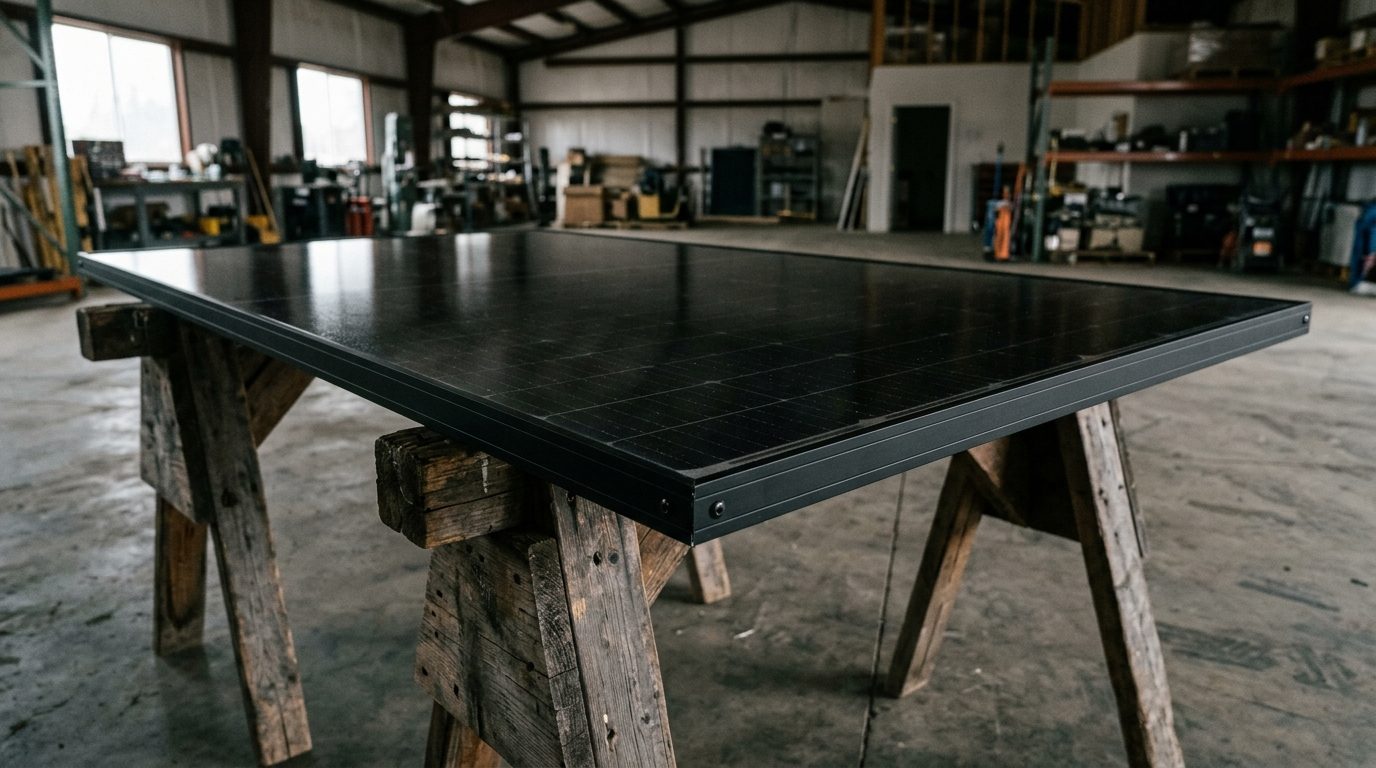
JKM440N-54HL4R-B, as listed from Jinko’s datasheet, is a 440 W module at 22.02% efficiency. Jinko US sells the 420–440 W black residential range as the EAGLE G6R.
| Spec | Value |
|---|---|
| Power | 440 W nameplate; US EAGLE G6R range 420–440 W |
| Module efficiency | 22.02% at 440 W |
| Size | 176.2 × 113.4 cm |
| Cells | 108 on the CEC listing for JKM420N-54HL4-B |
| Temperature coefficient of Pmax | −0.29%/°C |
| Power tolerance | ±3% |
| Operating temperature | −40 °C to +85 °C |
| Max system voltage | 1000 V on the CEC row for JKM420N-54HL4-B, under UL 61730 |
| Product warranty | 12 years on Jinko US EAGLE G6R; 25 years on the Australian listing of this SKU |
| Power warranty | 30-year linear: 1% in year 1, then 0.40%/yr, 87.4% at year 30 |
Power, efficiency, size, the temperature coefficient, tolerance, operating range, and the degradation schedule are from the CHOICE listing of the Jinko datasheet, seen November 2026. That listing gives China as the country of origin. The 1000 V figure and the 108-cell count are from the California Energy Commission PV module list, stated on JKM420N-54HL4-B. The CEC page used here does not repeat 1000 V on every 54HL4R-B wattage.
Jinko’s US page for the EAGLE G6R adds construction that wattage listing does not: black backsheet, black frame, Fire Type 1, 3.2 mm front glass, and a twin-array layout for partial shading. Weight and frame thickness for this SKU are not on the listings used here.
The 2021 launch claim used −0.30%/°C. Jinko’s Tiger Neo technology page and this 440 W listing both show −0.29%/°C.
Which Tiger Neo fits a home roof?
Match the code to the job. A higher wattage under the same Tiger Neo name is often a longer bifacial module, or a generation Jinko has not pointed at the United States.
| Module | Power | Efficiency | Size | Bifacial | Typical use |
|---|---|---|---|---|---|
| JKM440N-54HL4R-B, EAGLE G6R (JKM420-440N-54HL4-B-R) | 420–440 W | 22.02% at 440 W | 176.2 × 113.4 cm | No | All-black home roof |
| JKM475N-60HL4-V | 475 W | 22.01% | 190.3 × 113.4 cm | Not stated | Larger home roof, if the length fits |
| EAGLE G6B, JKM580-600N-72HL4-BDV | 580–600 W | — | — | Yes, dual glass | Ground mount or commercial |
| Tiger Neo 3.0, JKM650-670N-66QL6-BDV | up to 670 W | 24.8% | — | Yes, bifaciality 85±5% | Not a US delivery target through end-2026 |
| Tiger Neo 5.0, JKM485–510T | up to 510 W | 25.52% | 1762 × 1134 × 30 mm, 22 kg | Monofacial dual glass | Europe and Australia; US availability not announced |
A dash means these sources do not give the figure. That includes G6B efficiency, G6B dimensions, and the dimensions of the 670 W module. A European residential Tiger Neo 3.0 is a smaller module than that 670 W panel: up to 490 W and 24.52% efficiency, 1762 × 1134 mm, under 25 kg. One all-black code on that European page is JKM465-485N-48QL6-DB. It is not on the US EAGLE list.
Pick the 420–440 W EAGLE G6R for a house roof that wants the all-black module Jinko US actually publishes. Step to the 475 W JKM475N-60HL4-V when fewer modules matter and the roof can take a 190.3 cm length. That listing shows a tolerance of 0 to +3%, a coefficient of −0.3%/°C, and origin as China, Malaysia, or the USA. Leave the EAGLE G6B for a ground mount or a commercial roof: it is the 580–600 W bifacial dual-glass module, aluminum frame, Fire Type 29. Jinko US does not publish a length for it in the pages used here, so a home quote that names a 72HL4-BDV needs the module drawing. None of these sources list a 560 W 72HL4-BDV. If the quote says 560 W, get the full code.
Do not size a US array on 670 W Tiger Neo 3.0 or 510 W Tiger Neo 5.0. A search for a 510 W black Tiger Neo splits. The 60HL4-V listing documented here is 475 W. The 510 W all-black module is the October 2026 Tiger Neo 5.0, and Jinko has not announced it for the US.
How many 440 W panels for an 8 kW system?
Nineteen JKM440N-54HL4R-B panels is the count that clears 8 kW of nameplate power. Divide 8,000 W by 440 W and you get 18.2. Eighteen panels stop at 7,920 W. Nineteen panels are 8,360 W, or 8.36 kW.
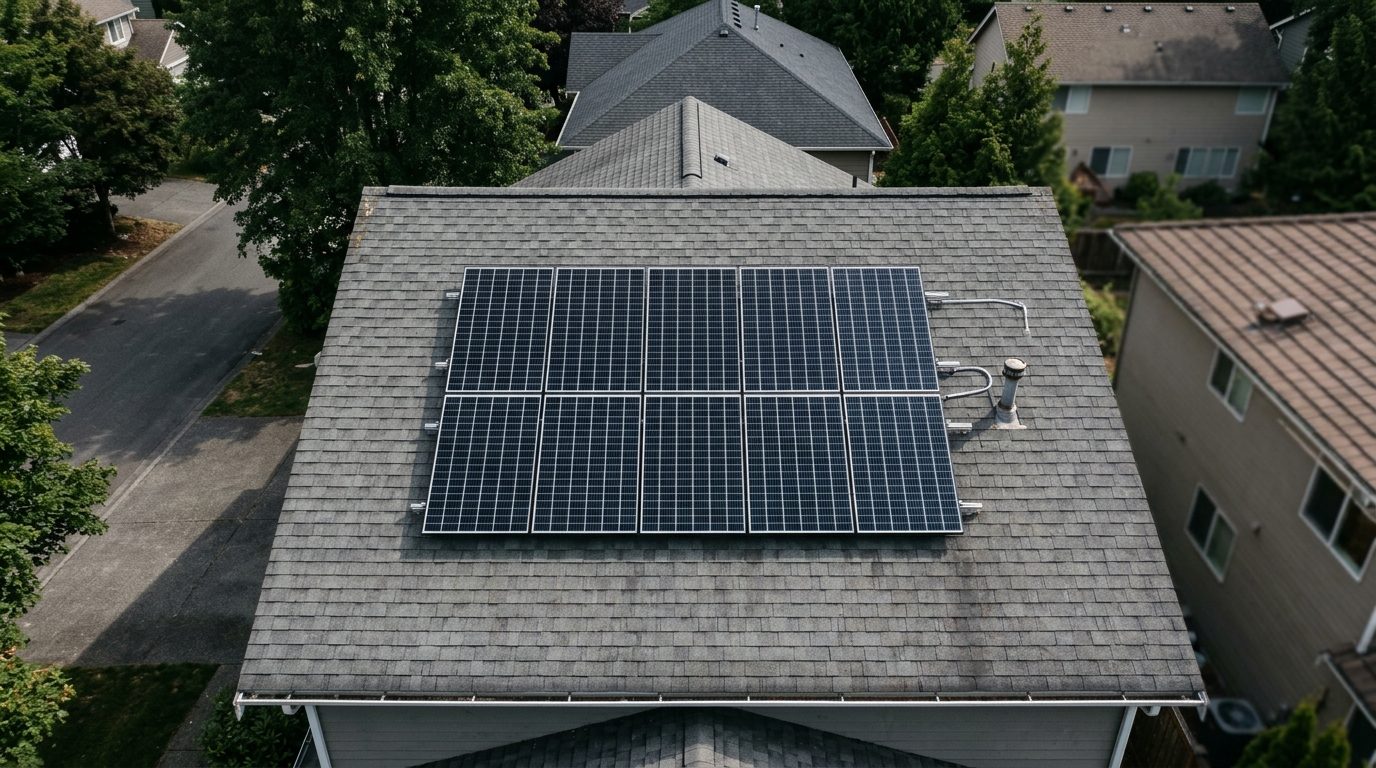
Each panel is 1.762 m by 1.134 m. That is 1.998 m², about 21.5 sq ft. Nineteen panels cover 1.998 × 19 = 38.0 m², about 409 sq ft. The figure is glass laid flat. It has no gaps and no fire setbacks. The roof you need is larger once those are in.
The same 8,000 W target with the 475 W JKM475N-60HL4-V takes 17 panels. Seventeen times 475 W is 8,075 W. Sixteen panels would be 7,600 W, short of the target. Each 475 W panel is 1.903 × 1.134 m, about 2.16 m² (23.2 sq ft). Seventeen cover about 36.7 m² (395 sq ft), again before gaps. You drop two module positions, and you take a module 14.1 cm longer.
Assumptions: STC nameplate watts, not annual kilowatt-hours; one wattage across the array; round up so nameplate meets or passes 8,000 W. Inverter loading and roof obstacles sit outside this count.
What warranty does a US Tiger Neo quote use?
Jinko US states a 12-year product warranty and a 30-year linear power warranty for the EAGLE G6R. The EAGLE G6B page uses the same 12-year product and 30-year power wording. The Australian listing for JKM440N-54HL4R-B shows a 25-year product warranty. The 475 W listing there shows 25 years product and 30 years performance.
Treat a US residential quote as 12 years product and 30 years power unless the warranty certificate on your serial numbers says otherwise. What changes that reading is the document the installer registers. Ask which Jinko warranty document applies before you pay.
The terms have moved. Clean Energy Reviews reports that Jinko cut the Tiger Neo product warranty from 15 years to 12 on 11 November 2021 and reversed the change on 29 November 2021. The same report says a 2023 warranty document lists 12 or 15 years product for most Tiger N-type, Neo, and Pro panels, and 25 years for selected models. That may be why a 440 W ad can say 25 years while the US EAGLE G6R page says 12.
How much power does a Tiger Neo keep after 30 years?
A 440 W panel on this schedule is warranted to about 384.6 W in year 30. That is 87.4% of nameplate.
The listing’s arithmetic matches the 2021 launch claim and Jinko’s Tiger Neo technology page: 1% in year 1, then 0.40% per year through year 30. Year 1 takes 1%. The next 29 years take 0.40 × 29 = 11.6%. The drop is 12.6%, so the remainder is 87.4%. Then 440 W × 0.874 = 384.6 W.
The 2021 launch stated at least 87.4% of nominal power after 30 years, with first-year degradation below 1%. It compared the series with p-type on temperature coefficient, −0.30%/°C against −0.35%/°C. It did not give a p-type year-30 remainder, so none is used here.
This is warranted output under the linear power warranty, not a prediction of roof production. Product-warranty length, 12 years or 25, does not change the 87.4% power figure. A dead module after the product warranty ends is a different claim from low output inside the 30-year power warranty.
Does a Tiger Neo lose less on a hot roof?
At a 65 °C cell temperature, a 440 W JKM440N-54HL4R-B is down about 11.6%, to about 389 W. The same steps with the −0.35%/°C p-type figure Jinko cites land at 14%, about 378 W.
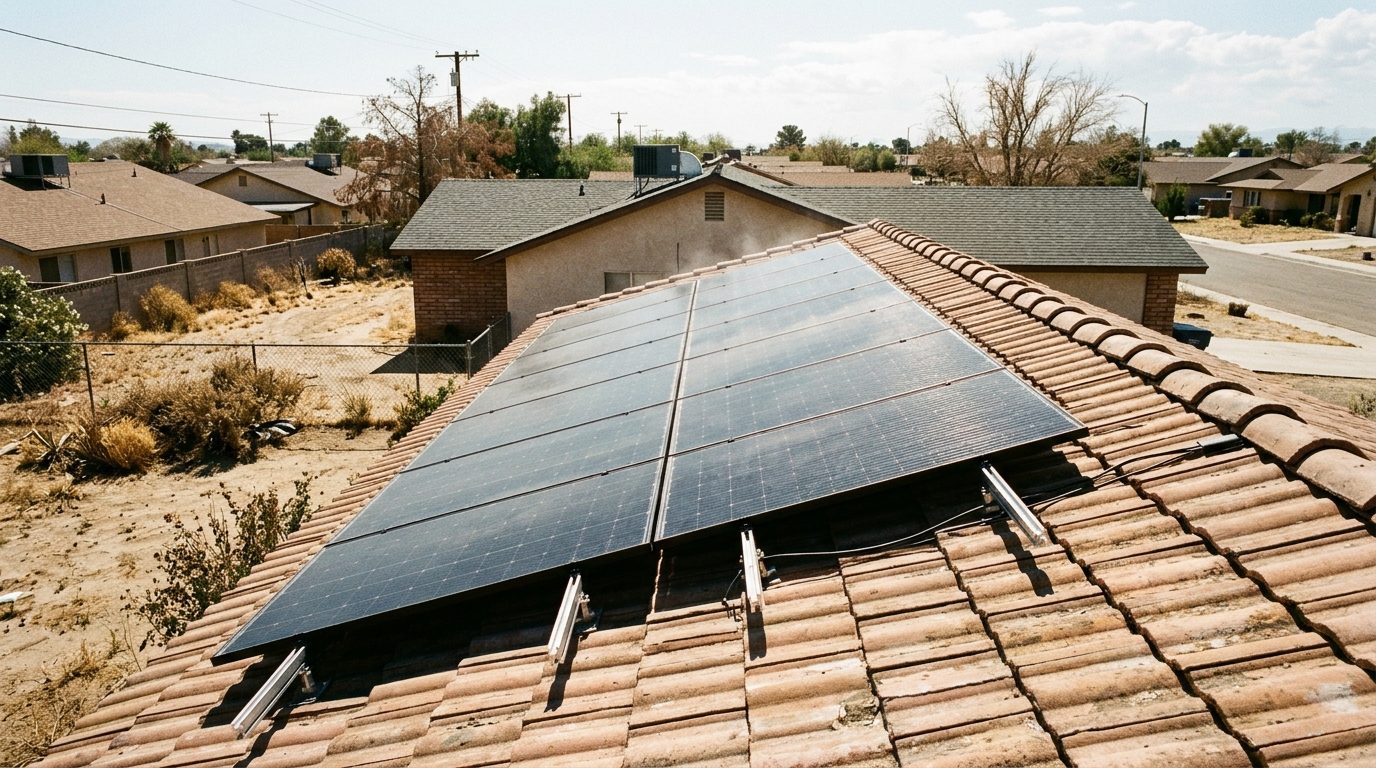
STC is 25 °C. A 65 °C cell is 40 °C above that. The 440 W coefficient is −0.29%/°C, so 0.29 × 40 = 11.6 percentage points. Loss is 440 × 0.116 = 51 W, which leaves 389 W. At −0.35%/°C the loss is 14%, or 61.6 W, which leaves 378.4 W. The gap on this example is about 10.6 W.
Jinko’s Tiger Neo technology page states −0.29%/°C against −0.35%/°C for p-type and says Tiger Neo makes about 2% more power than p-type in high heat. That page does not state the cell temperature behind the 2%. The 65 °C figure is an assumption for a hot roof, not a measured temperature from these sources. The 475 W listing uses −0.3%/°C, so the 11.6% figure does not transfer to that code. Tiger Neo 3.0 is listed at −0.26%/°C and Tiger Neo 5.0 at −0.24%/°C. Those belong to modules that are not the current US home quote.
Wind and the air gap under the array move cell temperature off 65 °C. Nothing here turns the loss into annual kilowatt-hours.
Are Jinko Tiger Neo panels good?
Jinko has a long Kiwa PVEL record, and that record does not name the module on your quote. For a US roof, judge the EAGLE G6R datasheet and the warranty document that will be registered. Test history and the rest of the brand verdict are on the Jinko panel review.
Jinko’s June 2025 release says the company took Top Performer status in all seven categories of the 2025 Kiwa PVEL PV Module Reliability Scorecard. That was the eleventh consecutive year. The release calls Jinko one of only two manufacturers with Top Performer status in all eleven editions. It does not name the module tested. A result on an unnamed module is not a test report for the JKM440N-54HL4R-B.
Orders are not a test. Jinko’s Tiger Neo 3.0 page says Tiger Neo series orders passed 230 GW by 31 August 2025, and that JinkoSolar had shipped over 350 GW of modules globally by the third quarter of 2025. Volume says the line is widely used. It does not say your pallet is the one PVEL tested.
That reading changes if a scorecard or the permit file names this code and shows a failed result, or if the registered warranty is shorter than the quote. Neither showing is in the sources used here.
Will Tiger Neo 3.0 or 5.0 show up in a US quote?
Not on the delivery notes Jinko has published. Tiger Neo 3.0, datasheet series JKM650-670N-66QL6-BDV, is a 670 W bifacial module at 24.8% module efficiency, 27% cell efficiency, bifaciality of 85±5%, and −0.26%/°C. Jinko’s Tiger Neo 3.0 page sets delivery for important markets by the end of 2025, and for the global market and all customers except the US by the end of 2026.
Tiger Neo 5.0 is later and smaller. pv magazine’s October 2026 report describes a JKM485–510T rooftop module at up to 510 W and 25.52% efficiency, with 48 cells, a size of 1,762 × 1,134 × 30 mm, a weight of 22 kg, and a coefficient of −0.24%/°C against about −0.26%/°C for Jinko’s previous TOPCon. It is monofacial dual glass, uses TAC cell technology as the report names it, and carries a 40-year product warranty plus a 40-year linear power warranty. Target markets in that report are Europe and Australia. Commercial availability and pricing had not been disclosed. Solar Power World, a day earlier, described the first version headed to market as an all-black 48-cell module for premium residential rooftops.
A US quote that says Tiger Neo and then 670 W, or a 510 W 5.0 figure, is ahead of those notes. Ask for the JKM code. A 54HL4R-B or the EAGLE G6R string is the current 420–440 W residential module. Any US availability note belongs on the news page.
Panels already on the roof from Tiger Pro, Cheetah, or Eagle p-type lines are a separate lookup. Size and voltage notes for adding or replacing them are on the discontinued models page.
Is Tiger Neo the same as EAGLE G6R?
For the black residential module, yes, if the code matches. Jinko US maps EAGLE G6R to JKM420-440N-54HL4-B-R and does not use the name Tiger Neo. A line printed as JKM440N-54HL4R-B is that wattage band and that all-black build. It is not EAGLE G6B (JKM580-600N-72HL4-BDV) and it is not EAGLE G7B (JKM615-640N-66HL4M-BDV). Keep the R. The CEC lists 54HL4-B and 54HL4R-B as separate rows.
Is Jinko Tiger Neo made in the USA?
Some Jinko modules are. Jinko US lists a factory in Jacksonville, Florida, plus plants in Malaysia and Vietnam, and warehouses in Long Beach, California; Houston, Texas; Port Elizabeth, New Jersey; and Jacksonville. The 440 W JKM440N-54HL4R-B listing gives country of origin as China. The 475 W JKM475N-60HL4-V listing gives China, Malaysia, or the USA. The pallet label is the origin that applies to your modules.
Is the 420 W N-type the same panel as the 440 W?
They are neighboring nameplates in one US series, not one panel with two stickers. Jinko US lists EAGLE G6R as JKM420-440N-54HL4-B-R. The CEC lists JKM420N-54HL4-B and JKM440N-54HL4-B as separate rows, and lists the R series from 405 W to 450 W. The 22.02% efficiency figure belongs to the 440 W listing. Count the watts printed after JKM.
Can you mix a Tiger Neo with an older Jinko panel?
Only after the two datasheets agree on voltage and current, and the rails accept the new size. The 440 W module is 176.2 × 113.4 cm. These sources do not list its Vmp or Imp, so that check is the datasheet in the quote. Older Tiger Pro, Cheetah, and Eagle p-type sizes are on the discontinued models page. Warranty follows the document registered for each serial.
Is a 560 W N-type Tiger Neo a home-roof panel?
These sources do not list a 560 W Tiger Neo. The bifacial 72HL4-BDV module on Jinko’s US download center is the EAGLE G6B at 580–600 W, dual glass, Fire Type 29, and no length is published on the pages used here. The all-black home module Jinko US does publish is the EAGLE G6R at 420–440 W. If the quote says 560 W, get the full JKM code and the dimension drawing before you treat it as a rooftop panel.
Check on your quote
- Full JKM code, including N and the suffix. EAGLE G6R is JKM420-440N-54HL4-B-R. A 72HL4-BDV, a 66QL6, or a 510T code is a different module.
- Nameplate watts behind the panel count. Eighteen 440 W panels are 7,920 W. Nineteen are 8,360 W.
- The warranty document that will be registered. Jinko US states 12 years product and 30 years linear power for the EAGLE G6R. The Australian listing of JKM440N-54HL4R-B shows 25 years product.
- The module on the permit set. The 1000 V figure cited here is the CEC row for JKM420N-54HL4-B under UL 61730. Confirm the row that matches your code.
- Origin on the pallet label, and any 670 W Tiger Neo 3.0 or 510 W Tiger Neo 5.0 claim. Jinko’s 3.0 delivery note excludes the US through the end of 2026. The 5.0 launch named Europe and Australia.